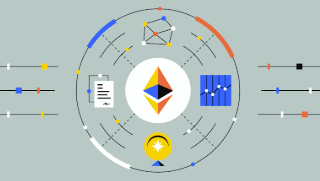
Sharding in blockchain partitions a network into multiple shards, each handling a subset of data and computation. Designs differ in governance, shard size, and cross-shard messaging, shaping throughput, latency, and security. The approach requires robust data availability and coordination to preserve decentralization. This framework raises questions about cross-shard communication, consistency guarantees, and failure modes. Understanding these trade-offs sets the stage for evaluating real‑world viability and future evolution.
What Is Sharding in Blockchain?
Sharding in blockchain is a scalability technique that partitions a network into multiple, smaller components called shards, each processing its own subset of transactions and smart contracts. The architecture enables parallel throughput, reducing global contention.
Sharding scalability relies on cross chain coordination, enabling inter-shard communication and eventual consistency. This approach preserves security properties while increasing modularity and freedom to grow networks without central bottlenecks.
How Sharding Differs Across Designs
Across different blockchain designs, sharding implementations vary in governance, partitioning granularity, cross-shard messaging, and consensus integration, yielding distinct trade-offs in throughput, latency, and security.
Sharding coordination emerges as a governance pattern, aligning shard responsibilities and updates.
Cross chain fragmentation describes architectural isolation among subchains, influencing data availability and validation.
Design choices balance decentralization, fault tolerance, and interoperability, shaping predictable scalability outcomes.
Why Sharding Impacts Speed and Cost
How does sharding affect transaction speed and cost? Systematically, sharding partitions workload across parallel units, enabling concurrent validation and throughput growth aligned with scalability milestones. Cross shard coordination introduces overhead, potentially increasing latency and introducing cross shard fees. Design choices balance shard count, validator communication, and finality. The result is improved capacity with careful cost-management, not guaranteed-linear speed gains.
Challenges, Trade-offs, and Real-World Outlook
The discussion now turns to the challenges, trade-offs, and real-world outlook of sharding, building on the prior analysis of speed and cost.
Architectural assessment identifies scalability governance as a central constraint, balancing shard count, cross-chain messaging, and validator workload.
Data availability remains pivotal, ensuring verifiable state without centralization.
Practical adoption hinges interoperability, security proofs, and transparent governance mechanisms for resilient networks.
See also: Cloud Systems Powering Global Innovation
Frequently Asked Questions
What Are Practical Security Guarantees of Sharding in Networks?
The security guarantees of sharding rely on cross chain transfers remaining atomic and verifiable; adversaries targeting individual shards face diminished impact, while cross chain transfers preserve composability and finality, albeit requiring robust cross-shard messaging and monitoring.
How Does Sharding Affect Cross-Chain Asset Transfers?
“Time is money.” Sharding cross chain transfers introduce partitioned throughput and coordination overhead; cross chain impact includes locking, relay delays, and eventual consistency considerations, with safeguards requiring atomicity-like mechanisms and standardized cross-chain messaging for robust interoperability.
Can Sharding Adapt to Sudden, Uneven User Activity?
Adaptive sharding can respond to uneven activity through load balancing and shard reconfiguration, enabling the system to reallocate resources. It maintains architectural integrity while accommodating freedom-focused stakeholders seeking resilient, scalable, and predictable performance amidst sudden demand shifts.
What Metadata Is Stored on Each Shard Versus Globally?
In this system, metadata is stored locally on each shard, while critical global state remains externally coordinated. Metadata storage includes transaction proofs, shard identifiers, and routing tables; shard coordination handles cross-shard consensus, synchronization, and global commitment proofs.
Which Projects Have Implemented Sharding in Production?
Answering which projects have implemented sharding in production: several networks claim sharding implementations, production projects include Ethereum 2.0 roadmap elements and others; however, practical, verifiable deployments remain limited, with ongoing architectural evaluations and incremental, pilot sharding efforts.
Conclusion
Sharding, when viewed as an architectural blueprint, partitions the blockchain into independent modules that still breathe as a cohesive machine. Each shard functions like a dedicated highway, handling traffic in parallel while a central routing system coordinates cross-shard calls. The design balances throughput, latency, and security through careful partitioning, data availability, and messaging guarantees. Real-world viability hinges on robust interoperability and governance. In essence, sharding scaffolds scalable, interconnected ecosystems without sacrificing decentralization or trust.